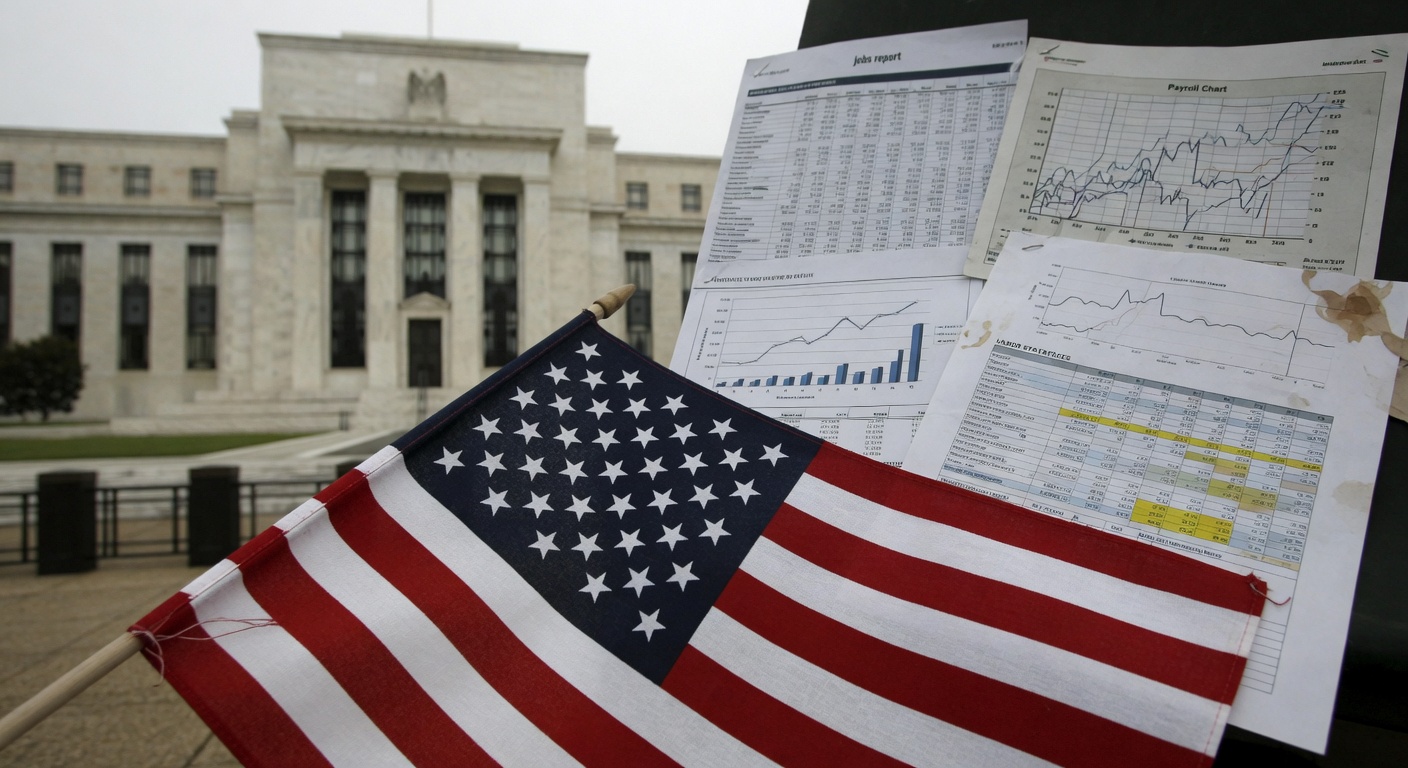
Weak US Jobs Data Eases Fed Rate Hike Concerns Amid Upcoming Inflation Read
- US employers unexpectedly shed jobs in July with downward revisions to prior months, while inflation data due later this week could keep September hike odds alive despite market pricing for a hold.
The July employment report released on August 8, 2026, delivered a surprise contraction in payrolls, marking a notable softening in the labor market after months of resilience. Revisions lowered hiring figures for May and June, amplifying the signal of cooling momentum.
This data arrives against a backdrop where the Federal Reserve has been weighing persistent inflationary pressures against growth risks, with officials like those referenced in recent commentary highlighting the need for vigilance on price stability.
Markets interpreted the softer jobs print as reducing immediate hike probabilities, boosting gold prices and easing Treasury yields. However, the report also noted a slight decline in the unemployment rate, complicating the narrative and suggesting some underlying strength.
Central to the story is the interplay with inflation metrics scheduled for release shortly, which could either reinforce or challenge the dovish tilt.
Analysts note that if CPI and PCE figures show continued cooling—building on prior trends—the Fed may feel more comfortable holding rates steady at its next meeting.
Conversely, firmer readings could revive September hike speculation, particularly given comments from Fed speakers emphasizing inflation risks.
This development matters because labor market data heavily influences the Fed's dual mandate assessments, directly affecting borrowing costs across the economy.
Sectors most impacted include interest-rate sensitive areas like housing, autos, and equities, where lower rates would support valuations while persistent inflation could pressure margins in consumer discretionary and financials.
Traders should monitor the upcoming inflation prints closely for confirmation of disinflation trends, alongside any follow-up statements from FOMC members.
Geopolitical factors, including ongoing Middle East tensions affecting energy prices, add another layer of uncertainty that could feed into both inflation and growth outlooks.
Overall, the jobs miss tilts the balance toward a more patient Fed stance in the near term, potentially supporting risk assets if inflation cooperates, but volatility remains elevated as markets price in shifting probabilities.
AI insight — what it means
The report shows US companies added fewer jobs than expected last month. This reduces the chance that the central bank will raise interest rates soon, which can support prices of stocks and other investments.
Unlock the full AI insight
Free account — takes 10 seconds.
- Why this story matters — explained simply
- How it moves prices, sectors and assets
- What traders and analysts are watching next
Share this story
Spread the signal — link, social or copy.
Related topics
Related coverage
Fed Chair Warsh Makes First Hires Including 'Project 2025' Author
Fed Officials Signal Readiness to Hike Rates on Inflation Risks

US April PCE Inflation Surges to 3.8% YoY, Fastest in Three Years
ECB Says Consumer Price Expectations Ease But Stay Elevated
US April Core PCE Inflation Hits 3.3% Annual Rate