RBA Minutes Reveal Divided Board on August Rate Hike Decision
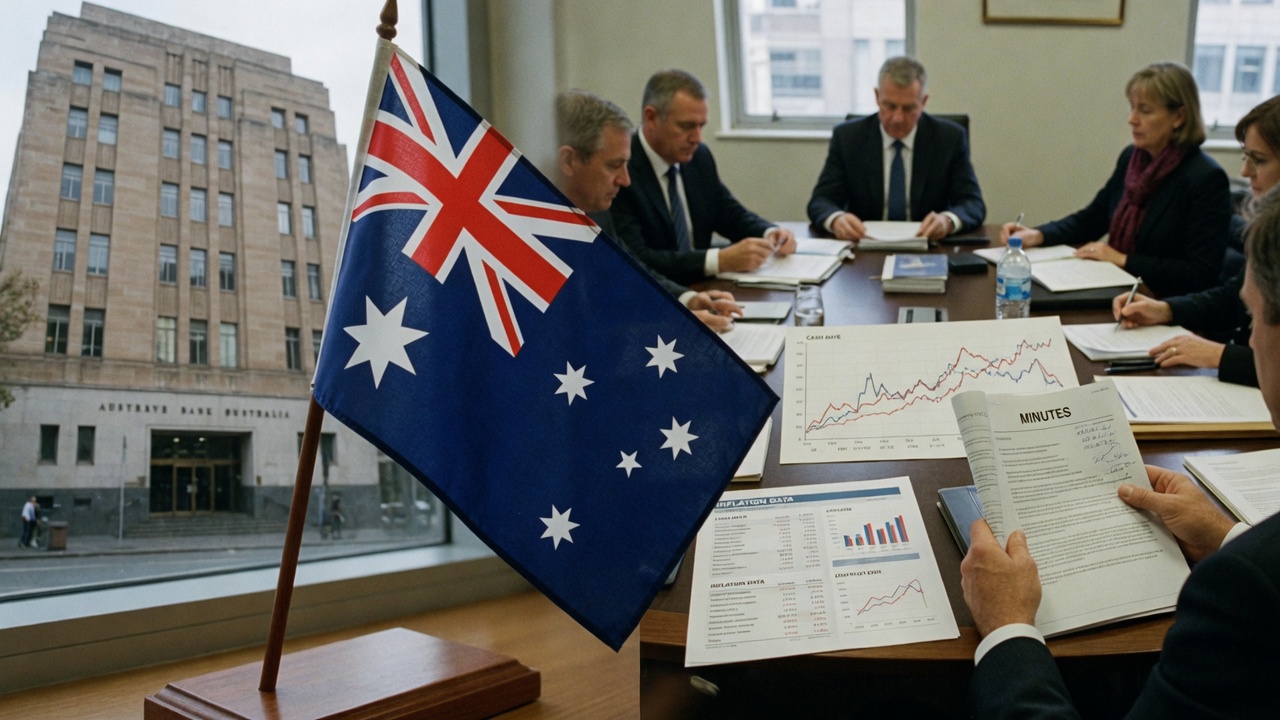
- The Reserve Bank of Australia's August meeting minutes showed the board was split on raising rates for a fourth time this year, with several members favoring a hike due to upside inflation risks, though the panel ultimately held the cash rate steady at 4.35%.
The release of the RBA's August meeting minutes highlights internal debate over monetary policy tightening, with 'several' board members arguing that further rate increases might be necessary to anchor inflation expectations amid upside risks, while others preferred to wait for more data.
The unanimous decision to hold rates at 4.35% reflects a cautious consensus that current settings are already working to bring price growth back toward the 2-3% target, but the division signals ongoing vigilance.
This development matters as it illustrates how central banks globally are navigating persistent inflation challenges without uniform agreement on the path forward, potentially influencing investor sentiment toward Australian assets.
Key drivers include recent inflation readings and the board's assessment that incoming data must show clear progress within a reasonable timeframe to avoid additional tightening.
Sectors impacted include Australian financials, which could gain from higher rates, and housing-related industries facing pressure from elevated borrowing costs. The Australian dollar may experience volatility on any hawkish interpretations.
Traders should monitor subsequent RBA communications, Australian inflation and employment data releases, and global commodity prices, given Australia's resource-heavy economy, to anticipate whether the divide resolves toward more hikes or a prolonged pause.
Cross-referencing with other central bank actions, such as those from the ECB and Fed, will help assess relative policy stances and potential carry trade implications.
AI insight — what it means
The Reserve Bank of Australia decided to leave its main interest rate unchanged after some board members wanted a hike. This keeps borrowing costs steady for now instead of making loans more expensive.
Unlock the full AI insight
Free account — takes 10 seconds.
- Why this story matters — explained simply
- How it moves prices, sectors and assets
- What traders and analysts are watching next
Share this story
Spread the signal — link, social or copy.
Related topics
Related coverage
Fed Chair Warsh Makes First Hires Including 'Project 2025' Author
Fed Officials Signal Readiness to Hike Rates on Inflation Risks
US April PCE Inflation Surges to 3.8% YoY, Fastest in Three Years
ECB Says Consumer Price Expectations Ease But Stay Elevated
US April Core PCE Inflation Hits 3.3% Annual Rate